
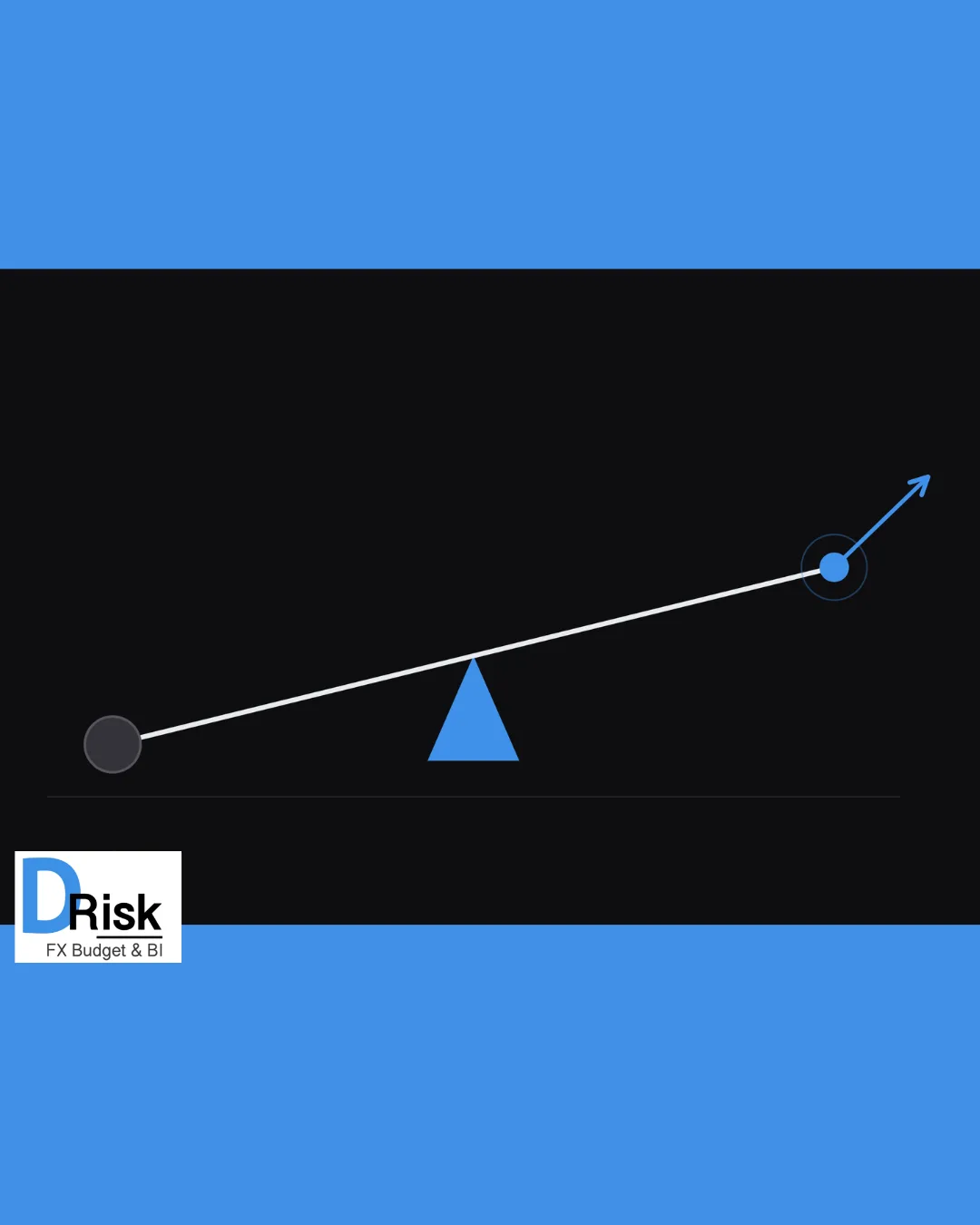
Risk management and value creation become inseparable when the function no longer serves only to limit losses, but enables better financial decisions.
This evolution transforms the role of risk within the company. Instead of being viewed solely as a constraint to reduce, risk becomes information that must be connected to the company’s objectives, expected profitability, and risk tolerance.
Why Is Risk Management Often Perceived as a Cost Center?
For a long time, risk management was considered an essentially defensive function.
Its role was to:
- protect the company;
- limit losses;
- ensure compliance;
- prevent limits from being exceeded.
Its effectiveness was therefore often measured by what had not happened. A loss avoided, an incident contained, or a limit respected confirmed that the function had fulfilled its role.
This contribution remains essential. But it represents only part of the value that risk management can provide.
The connection between risk management and value creation emerges when risk information begins to guide decisions rather than simply document threats.
Risk Management and Value Creation: Where Does the Shift Occur?
Value creation begins when risk management improves the quality of decisions.
The most effective finance teams no longer focus solely on how to monitor or reduce risk. They seek to understand what that risk means for the company’s financial objectives and at what point it justifies action.
The COSO Enterprise Risk Management framework establishes a direct connection between risk, strategy, and performance.
Strategic risk management should make it possible to determine:
- whether financial objectives remain achievable;
- how much of the risk tolerance has already been consumed;
- how much flexibility remains available;
- at what point action becomes justified;
- in what proportions to act.
Risk management then ceases to be solely a control function. It becomes a decision framework.
Foreign Exchange Risk Illustrates This Transformation
Most companies can monitor currency movements. They know today’s exchange rates, their exposures, and the hedges already in place.
The real challenge is generally not a lack of information.
It is connecting that information to the budget, expected profitability, and the company’s risk tolerance to determine when to hedge foreign exchange risk.
An exchange rate, by itself, does not indicate whether action is required. A hedge, considered in isolation, does not reveal how much flexibility remains available. A budget does not indicate whether expected profitability still remains within the defined risk tolerance.
The decision only becomes clear when these elements are considered together.
In this context, risk management and value creation depend on the ability to act at the right time, in the right amounts, while preserving as much flexibility as possible.
Acting Too Early or Too Late: Two Sources of Lost Value
Acting too early provides greater protection but reduces flexibility and participation in favorable movements.
Acting too late means that margins or expected profitability may already have been affected.
The objective is therefore not to eliminate risk. It is to remain within risk tolerance while preserving as much flexibility as possible.
Value comes from the ability to determine:
- when to act;
- how much to hedge;
- how much additional protection to add;
- how much flexibility to retain.
Deploying protection progressively as risk tolerance is consumed helps manage risk without unnecessarily locking in the strategy.
From Risk Monitoring to Decision Visibility
Monitoring indicates what is happening. Decision visibility makes it possible to understand what it means for the company.
This distinction is fundamental.
Decision-oriented risk management provides finance teams with:
- a forward-looking view of profitability;
- objective decision markers;
- a measure of remaining risk tolerance;
- a shared view of risk and its management;
- a stronger ability to explain and justify decisions.
D-Risk FX connects currencies, budgets, exposures, hedges, expected profitability, and risk tolerance to translate market movements into decisions adapted to each company’s specific situation.
When Does Risk Management Become Truly Strategic?
Risk management becomes strategic when it helps the company balance protection, performance, and flexibility.
It no longer focuses solely on answering the question:
“How can we reduce risk?”
It makes it possible to answer a more useful question:
“How can we use risk to make better financial decisions?”
This is when risk management stops being solely a cost center and becomes a genuine lever for value creation.
Frequently Asked Questions
How Does Risk Management Create Value?
Risk management creates value when it improves financial decisions, protects profitability within defined limits, and helps preserve the company’s flexibility.
Should Companies Eliminate All Risk to Protect Themselves?
No. Eliminating risk can unnecessarily reduce flexibility and favorable upside. The objective is to keep the company within its risk tolerance while protecting its financial objectives.
What Is the Connection Between Risk Management and Value Creation?
Risk management creates value when it provides the decision markers needed to protect financial objectives, preserve flexibility, and act only when the company’s situation justifies it.
What Role Does D-Risk FX Play in Decision-Making?
D-Risk FX provides a decision framework that connects market data to the budget, expected profitability, existing hedges, and the company’s risk tolerance. Finance teams therefore have clear decision markers to determine when to act and how much to hedge.